Lucrative infrastructure and intentional bypassing
27.Feb 2026
Lucrative infrastructure and intentional bypassing Comparing two Chinese-financed infrastructure projects in Kenya
Published in Urban Studies

Zhengli Huang
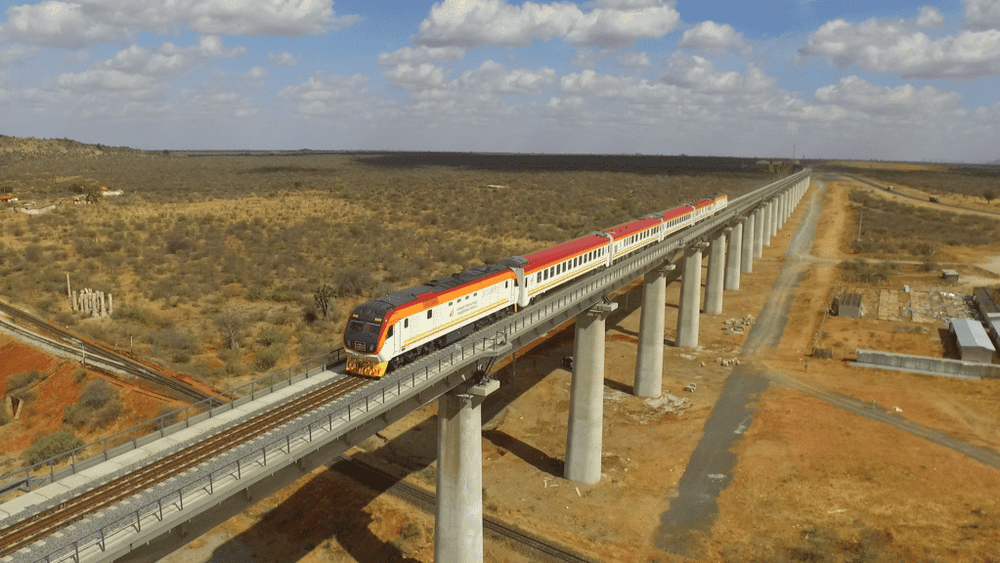
This paper traces the evolution of Chinese finance in infrastructure development in Kenya, transitioning from a government-to-government (G2G) to a public-private-partnership (PPP) model, as exemplified by the Kenyan Standard Gauge Railway (SGR) and the Nairobi Expressway. It demonstrates how financing models redistribute risks and control among stakeholders, producing distinct spatial outcomes. The G2G-financed SGR placed financial risks on Kenyan institutions while limiting Chinese contractors’ authority, resulting in uneven and short-lived development gains in towns such as Voi. The PPP-financed Expressway, on the other hand, transferred greater financial exposure to the Chinese concessionaire but also granted tighter technical and operational control, embedding profitability imperatives into its design and operation. The paper argues that the shift in financing not only commodifies infrastructure but also institutionalises bypassing, as projects increasingly prioritise exclusive flows, tolled access, and selective connectivity over inclusive integration. It challenges the assumption that PPPs represent a more efficient financing model, and shows instead how the redistribution of risk and control through financing models shapes the socio-spatial inequalities of large-scale connectivity infrastructure.
Menu